

Critical Thinking and Media Literacy / Social Media Algorithms
What are social media algorithms?
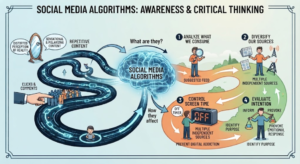
Social media algorithms are automated systems that analyze our online behavior to show us personalized content based on our interests and interactions. We spend a lot of time on social platforms every day, don’t we?
How do they affect us and spread content?
These platforms are designed to keep our attention for as long as possible. They promote sensationalist or polarizing content because it generates more clicks and comments, which can distort our perception of reality. High engagement drives the visibility of a post, doesn’t it?
Who benefits from this?
Large digital platforms and advertising companies aim to monetize our time and data. Furthermore, certain organizations use these algorithms to influence public opinion or consumer habits. We have all noticed how ads match our recent searches, haven’t we?
How can we avoid manipulation and protect ourselves?
- Analyze what we consume: Question why the algorithm continuously suggests specific types of repetitive content.
- Diversify sources: Search for information independently instead of relying solely on a social media feed.
- Control screen time: Set daily limits on digital devices to prevent digital addiction.
- Evaluate intention: Identify whether a post intends to inform or simply trigger an emotional response.
Personal opinion:
In my opinion, understanding how algorithms work and recognizing digital manipulation is an essential skill today. As multimedia students and active internet users, applying media literacy helps us consume digital content consciously and responsibly without letting technology control our thinking. Developing critical thinking is crucial in the digital era, isn’t it?